
Nothing beats the aroma and tenderness of a perfectly roasted prime rib, especially when paired with a creamy, tangy horseradish sauce. This Prime Rib with Horseradish Sauce Recipe is not just a meal; it's a celebration on your plate that’s surprisingly simple to pull off.

Jump to:
Why You'll Love This Recipe
I’ve made this prime rib roast more times than I can count, and I’m always impressed by how the horseradish sauce brings out the best flavors. It’s straightforward but feels luxurious – perfect for special dinners or holiday celebrations. You don’t have to be a pro cook to wow your guests with this one.
- Perfectly Juicy: The slow cooking method locks in the prime rib’s juices, keeping it tender and flavorful every single time.
- Flavorful Herb Rub: Fresh rosemary, thyme, garlic, and a touch of Dijon add complexity without overpowering the beef.
- Easy Horseradish Sauce: Creamy and zesty, this sauce is the ideal partner to cut through the richness of the beef.
- Impresses Crowd: Whether it’s a holiday feast or Sunday dinner, this recipe feels special without complicated techniques.

Ingredients & Why They Work
Each ingredient here plays a role in creating a perfectly balanced dish. The prime rib is the star, but the herb rub and horseradish sauce tie it all together beautifully—fresh herbs for aroma, Dijon for subtle tang, and creamy elements in the sauce to mellow the horseradish’s bite.

- Prime rib roast: Choose a well-marbled roast for juicy, flavorful results; the fat melts down and keeps the meat tender.
- Olive oil: Helps the rub stick and encourages browning on the crust.
- Coarse kosher salt: Enhances flavor and forms a savory crust.
- Freshly ground black pepper: Adds an earthy spiciness.
- Garlic: Minced fresh garlic brings a fragrant punch that's irreplaceable by powders.
- Fresh rosemary: Woody and aromatic, perfect for roasting meats.
- Fresh thyme: Adds subtle herbal notes that complement rosemary.
- Dijon mustard: Binds the rub and adds gentle tanginess.
- Sour cream: Forms the creamy base of the horseradish sauce.
- Heavy cream: Adds richness and smooth texture to the sauce.
- Mayonnaise: Boosts creaminess and balances acidity.
- Prepared horseradish: Gives the sauce its signature spicy kick.
- Kosher salt (for sauce): To taste, balances all flavors in the sauce.
- Chopped chives: Fresh and mild onion flavor, plus a lovely pop of green color.
Make It Your Way
I love mixing up this classic with a few tweaks depending on the occasion. Trust me, once you get the basics down, making it your own is a delicious adventure you’ll look forward to.
- Variation: For a smoky twist, try adding a teaspoon of smoked paprika to the herb rub - it’s subtle but adds a depth you’ll find addictive.
- Dietary tweak: Swap out mayo in the horseradish sauce for Greek yogurt for a lighter, tangy alternative without losing creaminess.
- Seasonal change: During colder months, stirring in a pinch of cayenne pepper to the horseradish sauce adds a cozy warmth that’s fantastic.
Step-by-Step: How I Make Prime Rib with Horseradish Sauce Recipe
Step 1: Get the Roast Ready, Ahead of Time
This is a game changer: unwrap your prime rib the night before and leave it uncovered in the fridge. This dry-aging step helps the crust develop when it roasts. Just make sure to take it out about two hours before cooking so it comes to room temperature – this ensures even roasting.
Step 2: Mix & Apply the Herb Rub
Combine olive oil, kosher salt, pepper, minced garlic, fresh rosemary, thyme, and Dijon mustard into a fragrant paste. Don’t skimp on the fresh garlic here – dried just won’t give the same pop. Rub this all over every inch of your roast, coating it generously. Place it bone-side down in your roasting pan. I find this helps the bones act like a roasting rack, preventing the meat from sitting in drippings.
Step 3: Roast with Patience
Preheat your oven to a roaring 500°F (yes, really high!). Roast the prime rib for 5 minutes per pound – so for a 6-pound roast, that’s 30 minutes at this high temp to get a gorgeous crust. Then, without opening the oven door, reduce the heat down to 200°F. Now let it slow roast for 20 minutes per pound until it hits your preferred internal temperature. I shoot for medium-rare, around 130°F – a meat thermometer is a total must!
Step 4: Rest Before Carving
After you pull it from the oven, resist the urge to slice immediately. Letting the roast rest for 15 minutes locks in the juices, resulting in slices that are juicy and tender, not dry. I usually cover the roast loosely with foil during this time.
Step 5: Whip Up the Horseradish Sauce
While the roast rests, whisk together sour cream, heavy cream, mayonnaise, prepared horseradish, kosher salt, and fresh chives. Taste and adjust salt or horseradish heat to your liking. This zippy sauce is where your prime rib finds its perfect foil.
Top Tip
This recipe is more forgiving than you might think, but a few insider tips make a big difference from good to great based on my own trial and error.
- Room Temperature Roast: Always let your prime rib come to room temp before roasting. I learned this the hard way – cold meat cooks unevenly, leading to parts overdone and others too rare.
- Thermometer Magic: Invest in a reliable digital meat thermometer; it’s the only way to get that perfect doneness every time without guessing.
- Keep Oven Door Closed: Resist peeking while the temperature drops to 200°F. Opening the door messes with the oven temp and lengthens cooking time.
- Resting is Non-Negotiable: I admit I’ve rushed this step before, but resting the roast is essential. The meat relaxes, redistributing juices so every bite is tender and juicy.
How to Serve Prime Rib with Horseradish Sauce Recipe

Garnishes
I like to keep garnishes simple but meaningful – a sprinkle of some extra fresh chives or rosemary sprigs on the platter not only adds color but also enhances aroma as you carve and serve. It’s those small touches that bring the experience alive.
Side Dishes
Classic sides like creamy mashed potatoes or roasted garlic-anchored vegetables pair beautifully. Sometimes I roast asparagus or make a fresh green salad with a lemon vinaigrette to lighten up the plate. Yorkshire pudding or crusty bread rounds it out when I want a British touch.
Creative Ways to Present
For special occasions, I've served slices on a wooden board surrounded by colorful roasted veggies and small bowls for horseradish sauce and au jus. Adding edible flowers or microgreens gives a beautiful, unexpected pop. Presentation really sets the tone, and prime rib deserves that spotlight.
Make Ahead and Storage
Storing Leftovers
I like to slice leftover prime rib and store it in an airtight container with a splash of beef broth or pan juices to keep it moist. Refrigerate for up to 3 days. This way, the meat remains juicy and ready for quick meals.
Freezing
Freezing is definitely possible—wrap slices tightly in plastic wrap and foil or use vacuum-sealed bags. When I’ve done this, the meat keeps its flavor but I recommend using frozen prime rib within 2-3 months for best quality.
Reheating
The best way I’ve found to reheat leftover prime rib is in a low oven (around 250°F) wrapped in foil with a bit of broth. This gently warms the meat without overcooking, keeping it juicy and tender.
Frequently Asked Questions:
The most reliable method is using a digital meat thermometer. For medium-rare, you want to remove the roast from the oven once it hits about 130°F because it will continue to cook slightly while resting. This avoids overcooking and ensures juicy slices.
Absolutely! The horseradish sauce actually benefits from resting an hour or so in the fridge, allowing the flavors to meld. Just give it a quick stir before serving and adjust seasoning if needed.
If fresh herbs aren’t on hand, you can substitute with dried rosemary and thyme, but use them sparingly since dried herbs are more concentrated. I recommend about one-third of the amount specified in the recipe and brushing the roast with extra Dijon mustard to help the dried herbs stick.
This recipe uses a handy rule: multiply the weight of your prime rib by 5 minutes at 500°F, then 20 minutes per pound at 200°F for slow roasting. For example, a 6-pound roast gets 30 minutes at high heat, followed by 2 more hours at low heat. This approach keeps cooking consistent regardless of size.
Final Thoughts
Honestly, this Prime Rib with Horseradish Sauce Recipe holds a warm spot in my heart because it turns an ordinary meal into a memorable feast. It’s approachable enough for everyday cooks but impressive enough for celebrations. Give yourself the permission to try it—you’ll thank me the moment you taste that tender, herb-crusted meat dipped in that creamy, punchy sauce.
Print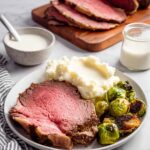
Prime Rib with Horseradish Sauce Recipe
- Prep Time: 15 minutes
- Cook Time: 2 hours 30 minutes
- Total Time: 2 hours 45 minutes
- Yield: 6 servings
- Category: Main Course
- Method: Baking
- Cuisine: American
Description
A classic Prime Rib Roast with a flavorful herb rub and a creamy horseradish sauce, perfect for special occasions and hearty dinners. This recipe guides you through preparing a perfectly cooked, medium-rare prime rib with a tender crust and a robust horseradish accompaniment.
Ingredients
Prime Rib Roast
- 4-8 pound prime rib roast
Rub
- ¼ cup olive oil
- 2 tablespoons coarse kosher salt
- 2 teaspoons freshly ground black pepper
- 4-5 cloves garlic, minced
- 2 tablespoons fresh rosemary
- 2 tablespoons fresh thyme
- 2 tablespoons dijon mustard
Horseradish Sauce
- ½ cup sour cream
- ½ cup heavy cream
- ¼ cup mayonnaise
- 4 tablespoons prepared horseradish
- Kosher salt to taste
- ¼ cup chopped chives
Instructions
- Prepare the Roast: Unwrap the prime rib roast and place it uncovered in the refrigerator overnight to dry and develop flavor. About 2 hours before cooking, remove it from the fridge and allow it to come to room temperature on the counter.
- Preheat Oven and Make Rub: 30 minutes before baking, preheat your oven to 500°F. In a bowl, combine olive oil, kosher salt, freshly ground black pepper, minced garlic, fresh rosemary, fresh thyme, and dijon mustard to create the rub.
- Apply Rub and Position Roast: Rub the herb and mustard mixture all over the roast thoroughly. Place the roast in a large roasting pan with the bones on the bottom and the meat on top.
- Initial High-Heat Cooking: Multiply the weight of the roast by 5 to determine the initial cooking time in minutes (e.g., 6-pound roast × 5 = 30 minutes). Cook the roast at 500°F for this time to develop a crust.
- Lower Temperature and Continue Cooking: Without opening the oven door, reduce the temperature to 200°F. Continue cooking for 20 minutes per pound until the roast reaches the desired internal temperature (130°F for medium-rare). Use a digital meat thermometer to verify doneness.
- Rest the Roast: Remove the roast from the oven and allow it to rest for 15 minutes to let juices redistribute before carving.
- Prepare Horseradish Sauce: While the roast rests, whisk together sour cream, heavy cream, mayonnaise, prepared horseradish, kosher salt to taste, and chopped chives until smooth and well combined.
- Serve: Carve the rested prime rib and serve with the freshly made horseradish sauce on the side.
Notes
- Letting the roast rest uncovered in the fridge overnight helps to dry the surface, which enhances browning and flavor development during roasting.
- Bringing the roast to room temperature before cooking ensures even cooking and better results.
- Using a digital meat thermometer is crucial to achieve your preferred doneness without overcooking.
- You can adjust the amount of horseradish in the sauce according to your heat preference.
- If fresh herbs are unavailable, dried rosemary and thyme can be used at half the quantity.
- Resting the meat after cooking prevents the juices from running out when sliced, keeping the meat juicy and tender.
Nutrition
- Serving Size: 1 serving
- Calories: 650 kcal
- Sugar: 2 g
- Sodium: 750 mg
- Fat: 52 g
- Saturated Fat: 20 g
- Unsaturated Fat: 28 g
- Trans Fat: 0.5 g
- Carbohydrates: 4 g
- Fiber: 0.5 g
- Protein: 45 g
- Cholesterol: 160 mg


Leave a Reply